
The Secret Inside PODS
Deception PointThis flow traces how a software failure, a fabricated repair, and a real discovery become entangled in a false claim about NASA’s capabilities.
increasing Bearing strength in each event
 decreasing
Bearing strength in each eventdecreasingThe Satellite Fails

The Satellite Fails
A programming defect
Chris Harper’s anomaly-detection software fails after PODS reaches orbit. The satellite can collect data but cannot reliably identify the density anomalies it was designed to flag.
The failure makes the project nearly useless for its intended survey and threatens Harper’s career at a moment when NASA is already under political pressure.
A costly delay
Repairing the system requires a later shuttle mission, leaving the satellite unable to produce the success NASA needs before the election.
The technical problem becomes a political liability, creating the conditions for officials to consider a shortcut.
The Fabricated Fix
The Fabricated Fix
A false press conference
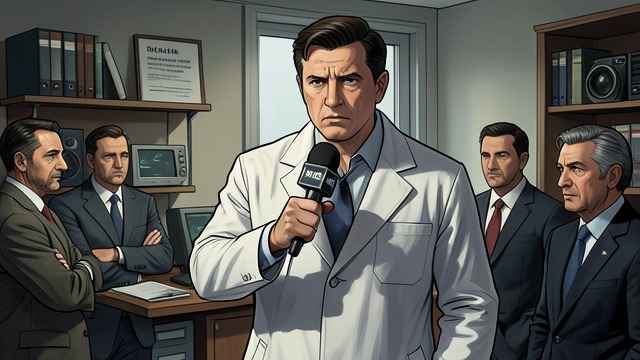
Harper is ordered to announce that NASA has found a software workaround. He knows the system is not repaired but is pressured by Ekstrom and Tench to protect the agency and administration.
He agrees, partly believing the repair will eventually be completed and partly fearing the end of his career.
A claim ready for use
The public statement makes it possible to claim that PODS later detects the meteorite. Without the fabricated repair, the satellite could not credibly be credited with the discovery.
A short technical lie becomes the hinge connecting the real object to the false story of how NASA found it.
Harper’s Confession

Harper’s Confession
Gabrielle applies pressure
Gabrielle confronts Harper with a fabricated allegation of embezzlement, hoping to force him to admit that he lied about the PODS software. Harper rejects the charge but eventually explains that he was ordered to make the false announcement.
His account implicates the NASA leadership in the software cover-up while distinguishing that lie from the larger meteorite deception.
A different source
Harper says NASA learned the coordinates from Brophy’s intercepted transmission. PODS did not actually discover the meteorite, even though Harper was later told to credit the satellite.
The confession gives Gabrielle a documented path from the technical failure to the public misinformation.
A Discovery Without PODS
A Discovery Without PODS
The claimed achievement challenged
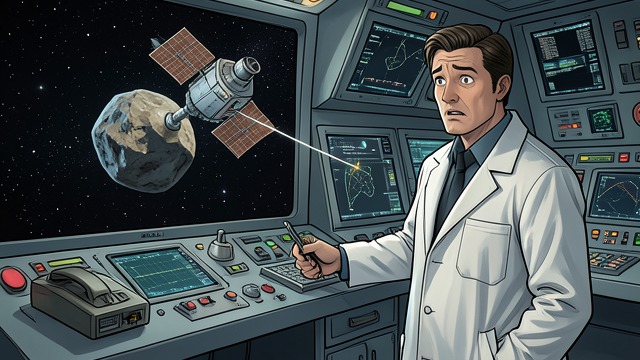
Harper’s explanation makes clear that the satellite did not produce the discovery that President Herney celebrated. The rock was already known through Brophy’s transmission, and PODS was repositioned to create the appearance of an independent detection.
This revelation compromises the administration’s claim about the satellite’s success but does not, by itself, disprove that the rock contains unusual material.
Two layers of truth
The fabricated repair and the staged meteorite discovery are related but distinct. Ekstrom and Tench helped misrepresent PODS, while Pickering’s separate plan engineered the larger hoax.
Separating these actions is essential to understanding who knew what and why the eventual public account must distinguish culpability carefully.
The Cost of the Shortcut
The Cost of the Shortcut
A technical problem becomes an ethical one
The PODS failure itself is an ordinary engineering setback. The decision to conceal it transforms it into a breach of public trust.
Officials who could have acknowledged delay instead create a success narrative that invites a much larger fraud to grow around it.
Accountability without simplification
Harper is pressured into lying, Ekstrom tries to protect NASA, and Tench pursues political advantage. Their motives differ, but the public receives a false account from all of them.
The episode shows that a technical failure can be corrected; institutional dishonesty makes the correction much harder.
A month before the public discovery
Two weeks before the announcement
Late night at NASA Headquarters
After the meteorite announcement
After the public correction
